What to Know About Year-Round Roadway Cafés in NYC
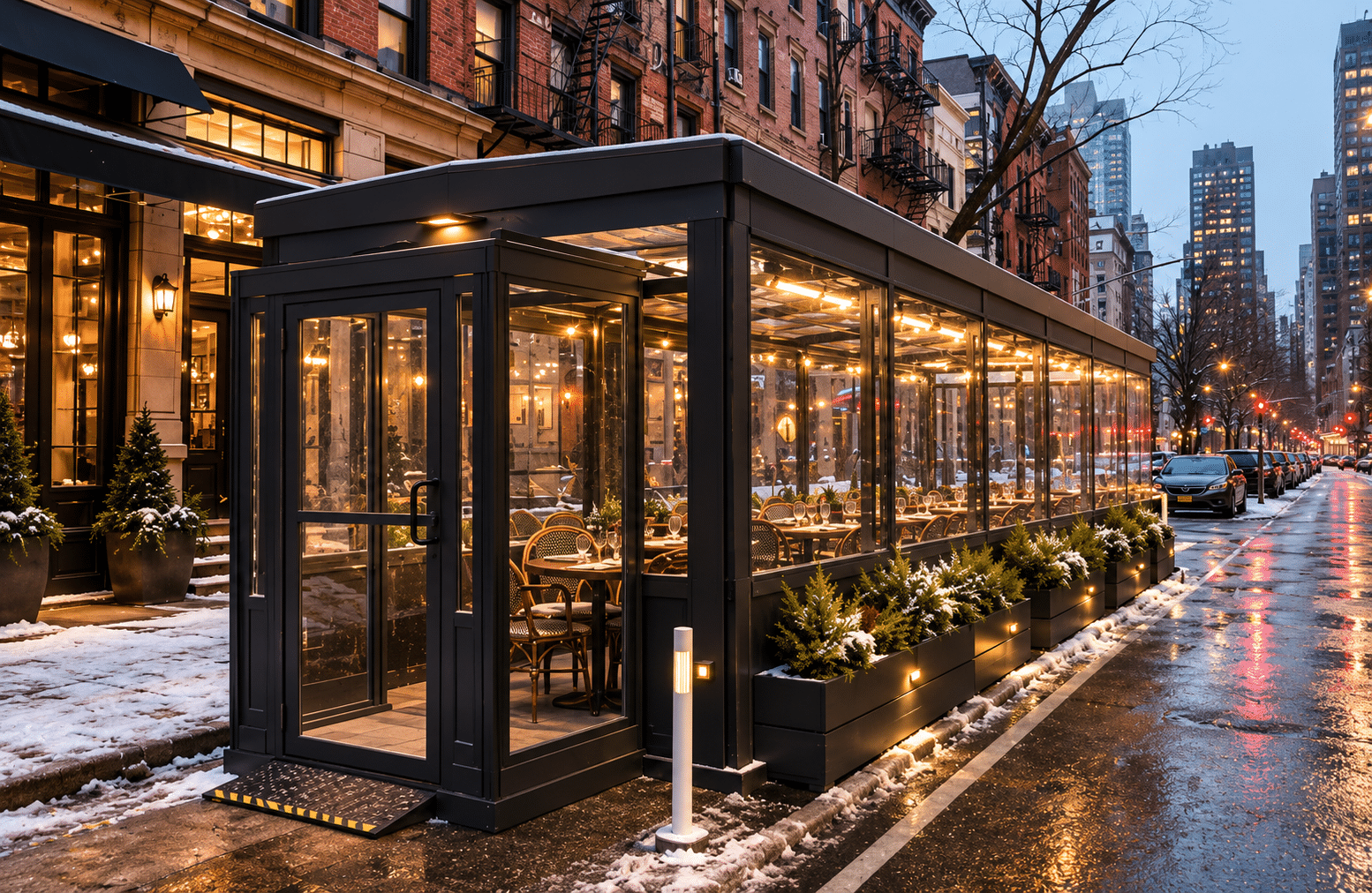
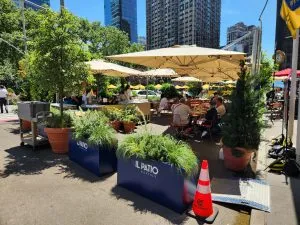
Outdoor dining has become a familiar part of New York City. Now, roadway cafés are entering a new phase. New York City recently approved year-round roadway dining, meaning eligible restaurants will no longer have to remove their roadway cafés for the winter season. This gives restaurant owners the opportunity to think about their outdoor space as a longer-term investment rather than a temporary summer setup.
What’s Changing For Roadway Cafe’s?
Previously, roadway cafés could operate from April through November. Under the new legislation, restaurants will have the option to operate them year-round, with further guidance around winterization still being developed.
While the season is changing, the basic requirements remain important. Roadway cafés still need to follow NYC DOT rules around placement, accessibility, materials, drainage and safety.
Building Around NYC DOT Requirements
Where and how a roadway café is built depends heavily on the location. NYC DOT requires a site plan showing details such as the café dimensions, furniture and nearby street infrastructure. Cafés also need to maintain specific clearances from elements such as fire hydrants, crosswalks, subway entrances and bike-share stations.
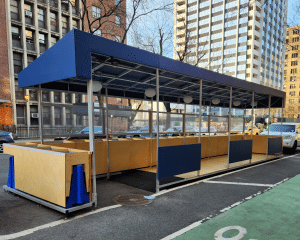
The barrier system is another important consideration. Current requirements include removable, interconnected barriers between 30 and 42 inches high, along with reflective material and sufficient ballast.
That doesn’t mean the finished café has to look purely functional. At Sign Expo, we can integrate practical solutions such as water ballast into custom bases or containers, helping provide the required weight while keeping the overall design clean and consistent with the restaurant.
Flooring and Maintenance
Flooring also needs to be designed for access and maintenance. If used, NYC DOT requires it to be durable, lightweight, mold-resistant, ADA-compliant and easily removable. It should sit flush or level with the adjacent curb where feasible and remain elevated from the roadway to allow for drainage.
The flooring must also be liftable for cleaning at least once a week, with a covered 6-inch channel maintained between the flooring and the curb so water can drain properly. That means the flooring system needs to be designed for regular access rather than treated as a permanent platform.
More Than Just the Structure
We look at flexible solutions that can adapt with the seasons, such as hinged window panels integrated into the structure. In colder months, the panels can be raised to help create a more enclosed, insulated space, while in warmer months they can be lowered or opened up for a lighter, more open-air setup.
That way, the café is designed from the start to transition between summer and winter use rather than needing to be rebuilt each season.
We Can Handle the Permit Process Too
Planning the structure is only one part of creating a roadway café. There are also site plans, required clearances, documentation and NYC approvals to consider.
Sign Expo can manage the permit process from start to finish, alongside the design, fabrication and installation of your café. This allows the compliance requirements to be considered from the beginning instead of becoming an issue once the design is already complete. Permit assistance is also part of Sign Expo’s broader service offering.
Ready for the Next Season
Year-round roadway dining gives restaurants more reason to invest in outdoor spaces that are durable, adaptable
and designed specifically for their location. From permits and site planning to barriers, ballast solutions, branding, fabrication and installation, Sign Expo can help bring the entire project together. The rules determine what a roadway café needs to do. Good design determines what it can become.
Planning a new roadway café or updating an existing one? Get in touch with our team.